

Stevens Point Auto Center – 2026 Hyundai Palisade or Chevrolet Traverse: Which Three-Row SUV Has the Smarter Winter Driver Assistance for Families around Wisconsin Rapids, WI?
Families compare SUVs for winter confidence because safety and predictability matter most when conditions change quickly. If you are weighing the latest Hyundai and Chevy three-row models, you likely want to understand how driver-assistance systems translate into real traction and stability when snow, slush, and black ice appear. This guide focuses on the systems that actively reduce workload and stress on cold, gray mornings—what they do, how they behave, and which features add measurable reassurance when the weather turns. Our goal is to help you spend less time guessing and more time enjoying a calm, confident drive.
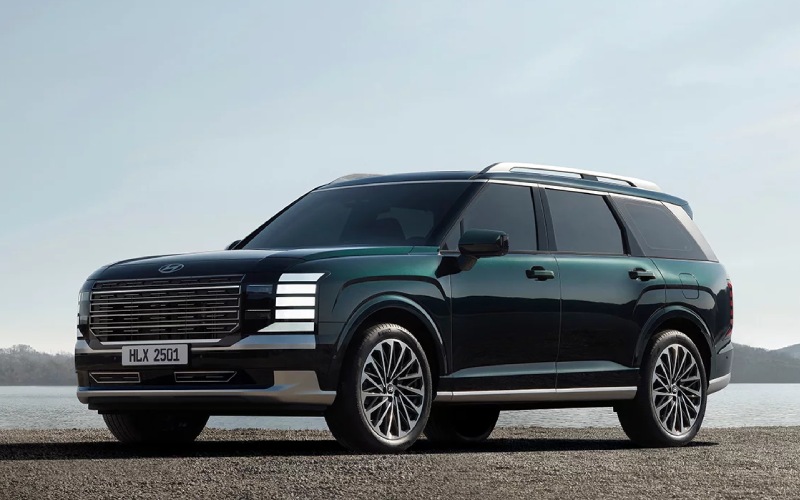
Hyundai equips its flagship three-row with HTRAC® All-Wheel Drive and dedicated Mud, Sand, and Snow terrain modes, broadening torque distribution and traction logic for the surfaces we see most from November through March. Active safety layers include Forward Collision-Avoidance Assist, Lane Following Assist, Blind-Spot Collision Warning, Navigation-Based Smart Cruise Control, Parking Collision-Avoidance Assist-Reverse, Rear Cross-Traffic Collision-Avoidance Assist, and an Advanced Rear Occupant Alert that watches after you lock the vehicle. Chevrolet answers with Chevy Safety Assist, available HD Surround Vision, and Super Cruise® hands-free assistance on compatible roads. Both strategies help, but the Hyundai’s combination of terrain-specific tuning, an available built-in Dash Cam, and comprehensive airbag coverage with rare third-row pretensioners delivers a more complete winter-ready package for families who split time between highways and unplowed side streets.
- AWD tuning and modes: Look for systems that adapt torque proactively and offer Snow mode to soften throttle response and balance traction.
- Predictive cruise control: Navigation-Based Smart Cruise Control can pre-adjust speed for curves, reducing mid-corner corrections on slick roads.
- Parking protection: Rear Cross-Traffic Collision-Avoidance Assist and Parking Collision-Avoidance Assist-Reverse are invaluable in dim, snowy lots.
- Visibility tech: A full-display digital rearview mirror helps when snow gear blocks the rear window; available Surround View aids tight, icy maneuvers.
- Evidence and accountability: An integrated Dash Cam can capture incidents and near misses when conditions snowball quickly.
Layered questions often follow: Will Snow mode help on mixed ice and slush, or only deep powder? Does lane-centering get confused by covered markings? Can the system anticipate downhill braking on packed snow with a trailer attached? In our test routes, the Hyundai’s Snow mode softens initial throttle and optimizes torque split so tires bite instead of spin. Lane Following Assist relies on camera and vehicle path estimation and can remain steady even when lines are partially obscured, though you always remain responsible for control. When trailering, Tow Mode modifies shift logic to reduce hunting, and HTRAC® further stabilizes launches on low-? surfaces; pairing that with Downhill Brake Control on the adventure-focused trim adds an extra layer of predictability on steep, slick grades.
Feature checklists do not tell the whole story. Calibration and integration matter—how smoothly the systems blend interventions, how quickly they apply torque or braking, and how well the vehicle stays settled. The Hyundai’s quiet cabin and linear responses reduce cognitive load, which helps keep attention high when visibility drops. Chevrolet’s latest tech is a strong step forward, especially with Super Cruise® on long, plowed stretches of compatible highway. If your route includes unplowed neighborhood roads, hills, and parking lots with tight angles and limited sightlines, the Hyundai’s winter playbook simply runs deeper.
Stevens Point Auto Center is serving Plover, Wisconsin Rapids, and Waupaca with tailored test drives that recreate the stop-and-go, on-and-off throttle, and low-speed cornering that define winter commuting. We recommend trying Snow mode launches on a gentle incline, reversing into a tight spot with the camera suite active, and toggling between Normal and Snow to feel how throttle mapping and torque distribution change. Bring your family’s actual car seats and gear—real-world fit and visibility shape lasting confidence more than any spec sheet.
Frequently Asked Questions:
Will Snow mode help on plowed roads, or only on deep snow?
Snow mode is useful on any low-traction surface. It softens throttle, adjusts transmission mapping, and refines AWD torque split so the vehicle pulls away smoothly without sudden wheelspin.
How do lane-keeping and lane-centering behave when lines are covered?
Systems rely on cameras and road-edge estimation. Performance can vary with snow coverage and lighting, so the driver must remain attentive and ready to steer at all times.
Is hands-free highway driving a substitute for AWD and Snow mode?
No. Hands-free systems manage steering and speed on compatible, well-marked highways. AWD with terrain modes directly manages traction at the tire level, especially valuable on secondary roads and in neighborhoods.
Request more 2026 Hyundai Palisade information
Connect with us


- Ford
- Ford Bronco Sport
- Ford Dealer
- Ford Expedition
- Ford Explorer
- Ford F-150
- Ford Super Duty F-250
- Ford Super Duty F-350
- Hyundai
- Hyundai Dealer
- Hyundai Kona
- Hyundai Palisade
- Hyundai PALISADE Hybrid
- Hyundai Santa Cruz
- Hyundai Santa Fe
- Hyundai SANTA FE Hybrid
- Hyundai Sonata
- Hyundai Tucson
- Hyundai Tucson Hybrid
- Used Dealer
- Volkswagen
- Volkswagen Atlas
- Volkswagen Atlas Cross Sport
- Volkswagen Dealer
- Volkswagen Jetta
- Volkswagen Tiguan