
Does the 2026 Hyundai KONA Offer Wireless Apple CarPlay® and Android Auto™ for Everyday Life in Stevens Point, WI?
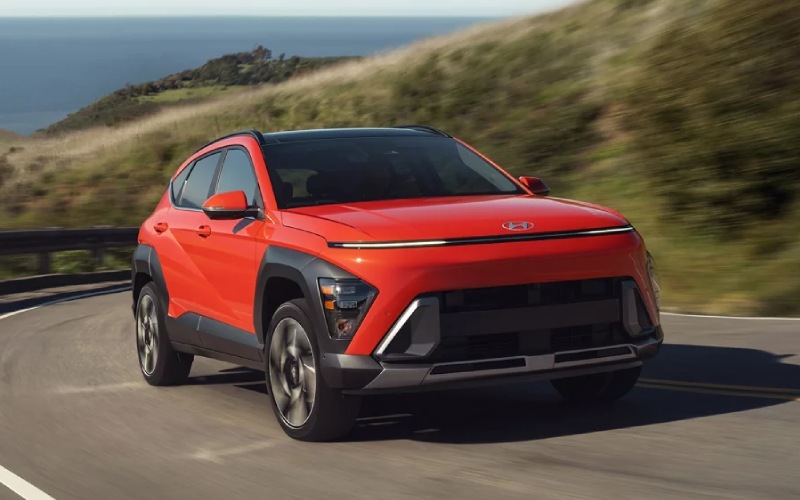
Stevens Point Auto Center – Does the 2026 Hyundai KONA Offer Wireless Apple CarPlay® and Android Auto™ for Everyday Life in Stevens Point, WI?
Short answer—yes. Every 2026 Hyundai KONA we offer at Stevens Point Auto Center includes wireless Apple CarPlay® and Android Auto™ as standard across all four trims: SE, SEL Sport, SEL Premium, and Limited. That means your music, maps, messages, and podcasts appear seamlessly on KONA’s standard 12.3-inch touchscreen display without fumbling for a cord on frosty mornings in Stevens Point, WI.
Because the experience is wireless, daily errands on Division Street, weekend drives up I-39, or commutes to Plover feel more intuitive—just start the engine and your compatible smartphone projects automatically after initial pairing. The interface fills the large 12.3-inch screen beautifully, and on KONA Limited you also get a 12.3-inch touchscreen display with navigation, so you can choose built-in guidance or your favorite app-based maps.
Getting started is straightforward. Here is a quick setup overview that our team can walk you through during your test drive:
- Make sure Bluetooth and Wi-Fi are enabled on your compatible iPhone or Android phone.
- Start your KONA and select the phone projection prompt on the 12.3-inch touchscreen.
- Choose your device from the on-screen list and confirm the pairing code matches.
- Accept the pairing and projection permissions on your phone to enable CarPlay or Android Auto.
- Set your device as the default profile if the KONA will regularly connect to your phone.
- Next time you drive, the system reconnects wirelessly—no cable needed.
Powering your phone while you project is easy, too. SEL Sport, SEL Premium, and Limited include wireless device charging, so you can drop your phone on the charging pad and go. Prefer a cable or driving a KONA SE? You still have USB options to keep your battery topped up in cold weather when navigation apps and streaming use more power.
- No cables in gloves: Wireless projection helps keep the cabin tidy and your hands focused, especially in winter.
- Big-screen clarity: The 12.3-inch touchscreen display showcases maps and media with crisp visuals.
- Fast familiarity: Your go-to apps look and feel the same as on your phone—no new learning curve.
- Easy sharing: Multiple drivers can pair their devices, so everyone in the household gets a tailored experience.
Beyond smartphone projection, KONA layers on useful tech for Central Wisconsin living. Bluelink+ lets you remotely lock and unlock, or start your KONA from a compatible smartphone—great when you want a warm cabin before a 6 a.m. commute. Hyundai Digital Key 2 Touch is available, allowing compatible phones to act as your key and even share access. KONA Limited adds Bose® Premium Audio and available Wi-Fi hotspot capability for road-trip streaming.
If your day calls for mixed weather and winding county roads, the KONA has your back. Available HTRAC All Wheel Drive adds confidence, and Hyundai SmartSense features—like Forward Collision-Avoidance Assist with Pedestrian, Cyclist, and Junction Turning Detection and Direct Oncoming (FCA-JT DO), Smart Cruise Control (SCC) with Stop & Go, and Blind-Spot Collision Warning (BCW)—support your awareness while wireless CarPlay and Android Auto keep you on-route and in-tune. On Limited, you can take advantage of Blind-Spot View Monitor (BVM), Surround View Monitor (SVM), Highway Driving Assist (HDA), and Remote Smart Parking Assist (RSPA) for even more convenience.
For best wireless performance, we suggest a few simple habits. Keep your phone’s operating system up to date, and confirm the latest app versions for the services you use most. If your device struggles to reconnect, try toggling Bluetooth off and on, or select “Forget This Car” and re-pair. Our product specialists are happy to help you fine-tune settings and test your favorite apps on a KONA during your visit.
When you are ready, bring your phone to Stevens Point Auto Center and see how the 2026 KONA elevates day-to-day driving around Portage County. We will help you compare trims—SE, SEL Sport, SEL Premium, and Limited—so you can decide whether you want wireless device charging, H-Tex® seating surfaces, the 190-hp 1.6L turbocharged GDI 4-cylinder engine, or the added peace of mind that comes with HTRAC All Wheel Drive. Every new Hyundai also brings the confidence of America’s Best Warranty, making KONA a smart long-term choice for Stevens Point, WI.
Want to experience it live? We will pair your phone, set up your profiles, and send you out on a familiar loop so you can test real-world navigation and calls—right here in Stevens Point.
Frequently Asked Questions:
Is wireless Apple CarPlay® and Android Auto™ standard on the 2026 Hyundai KONA?
Yes. Wireless Apple CarPlay® and Android Auto™ are standard on every 2026 KONA trim—SE, SEL Sport, SEL Premium, and Limited.
Which trims include wireless device charging?
Wireless device charging is included on SEL Sport, SEL Premium, and Limited. KONA SE supports wireless projection and offers USB power for charging.
Can I still use a USB cable if I prefer wired projection?
Yes. You can plug in if you prefer a wired connection or want faster charging—your KONA supports both wireless projection and USB connectivity.
Does KONA have built-in navigation if I do not want to use my phone?
Yes. KONA Limited includes a 12.3-inch touchscreen display with navigation. You can also continue using Apple CarPlay® or Android Auto™ for app-based maps.
Will wireless projection work alongside Hyundai Digital Key 2 Touch and Bluelink+?
Yes. Wireless Apple CarPlay® and Android Auto™ work independently of Hyundai Digital Key 2 Touch and Bluelink+, so you can use all three together for maximum convenience.
How does this tech help in winter driving around Stevens Point, WI?
Wireless projection eliminates cable clutter, and features like Bluelink+ remote start make cold mornings easier. Pair that with available HTRAC All Wheel Drive and Hyundai SmartSense driver assistance systems for added confidence on snowy routes.
Request more 2026 Hyundai Kona information
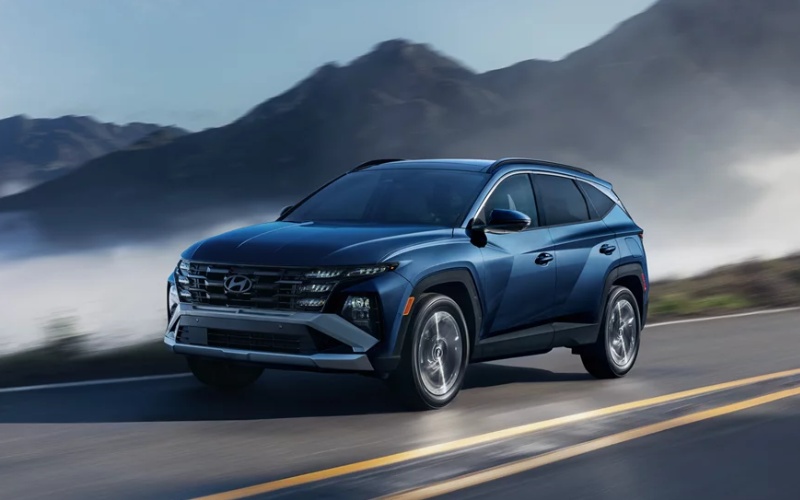
Stevens Point Auto Center – Recommended service and maintenance schedule for Hyundai Tucson
Your Hyundai Tucson is engineered for everyday confidence, and the best way to protect that experience is a consistent, factory-informed maintenance plan. As a trusted dealership serving customers in Stevens Point, WI, Wausau, and Plover, we make it easy to follow the right schedule for your model year, engine, and driving style. Our factory-trained technicians use genuine Hyundai parts, perform digital multi-point inspections, and review results with you in plain language. From convenient online scheduling and same-day basics to comfortable waiting amenities and transportation options, we design service around your life. Whether your Tucson features HTRAC AWD or the latest Hyundai SmartSense driver-assist technologies, our team checks the systems that keep you safe, efficient, and ready for Wisconsin weather. Intervals vary by model year and conditions, but the following guidelines work well for most Tucson vehicles. Always consult your Owner’s Manual and contact the manufacturer or our service team for exact recommendations. We’re here to help you plan ahead, protect your warranty coverage, and preserve long-term value at Stevens Point Auto Center.
- Every 6 months or 5,000-7,500 miles: Engine oil and filter, tire rotation, brake visual inspection, fluid top-off, wiper and exterior light check.
- 12 months or 15,000 miles: Cabin air filter inspect or replace, battery test, alignment and tire wear review, road test for noises or pulls.
- 24 months or 30,000 miles: Engine air filter, brake fluid test and service as needed, cooling system inspection, fuel system cleaning if required.
- 36 months or 45,000 miles: Comprehensive brake measurement, suspension and steering checks, replace wiper blades, rotate tires and rebalance if needed.
- 48 months or 60,000 miles: Coolant service per manual, transmission fluid inspection or service if applicable, AWD coupling and differential fluid checks.
- 72 months or 90,000 miles: Drive belt inspection or replacement, deeper cooling system review, detailed underbody and exhaust inspection.
- At every visit: Multi-point inspection report, software updates for infotainment and Hyundai SmartSense, open recall and TSB check.
- Seasonal prep: Winter battery and tire pressure review, blade replacement, and undercarriage wash to help combat road salt.
Set yourself up for success with a few simple steps. First, identify whether you drive under Normal or Severe conditions in your Owner’s Manual, then match your visits to that chart. Next, schedule ahead at regular mileage milestones, and keep service records in your glovebox or digital wallet. Make tire checks a monthly habit, watch for dashboard indicators, and address small issues early to prevent costly repairs. When in doubt, ask us to road-test with you so we can hear and feel any concerns first-hand. Recommendations can vary by model year and powertrain, so please verify specifics with Hyundai or our service advisors. Ready to keep your Tucson performing at its best in every season? Request more information, book your next visit, or send us your questions—our team is happy to help you plan the perfect maintenance routine for your SUV.
Request more 2026 Hyundai Tucson information
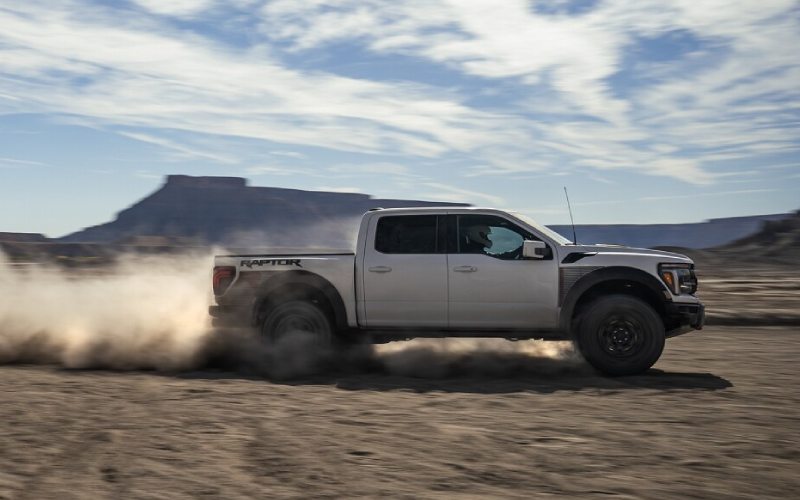
Stevens Point Auto Center – Recommended service and maintenance schedule for Ford F-150
- Every 7,500-10,000 miles or 1 year: Change engine oil and filter using the correct Ford specification; rotate and balance tires; inspect front and rear brakes; check and top off fluids; test exterior lights and wiper blades; reset the Intelligent Oil-Life Monitor.
- 15,000 miles: Replace cabin air filter if equipped; measure brake pad and rotor thickness; inspect battery state of health and charging performance; torque lug nuts and visually inspect wheels for damage.
- 30,000 miles: Replace engine air filter; inspect cooling system hoses and clamps; evaluate alignment and suspension components; check transfer case fluid condition on 4×4 models; inspect exhaust and heat shields.
- 45,000 miles or 3 years: Exchange brake fluid as needed based on test results; recheck cabin air filter; inspect steering linkage, tie rods, and ball joints; perform a thorough road test for noise and vibration.
- 60,000 miles: Inspect automatic transmission fluid and service per Owner’s Manual; replace front and rear axle fluids on trucks used for frequent towing, hauling, or off-road; inspect drive belt and tensioner; service 4×4 hubs if applicable.
- 100,000 miles: Replace spark plugs on most gasoline engines; replace engine coolant per interval; inspect water pump, hoses, and thermostat; examine fuel system and consider a professional induction service if drivability concerns are present.
- At every visit: Check for software updates, Technical Service Bulletins, and open recalls; verify Ford Co-Pilot360® cameras and sensors are clean and properly aimed; document tire tread depth and set tire pressures to spec.
Keeping your Ford® F-150® on schedule is the easiest way to protect capability, whether you tow on weekends or commute daily. Our factory-trained Ford technicians use Genuine Ford Parts and Motorcraft® fluids, follow model year and engine specific procedures, and provide clear digital inspection reports so you know exactly what was checked and why it matters. As a local team proudly serving in Stevens Point, WI, Wausau, and Plover, we make it simple to stay on track with easy online scheduling, same day maintenance on most services, and available Pickup & Delivery for Ford owners where offered. To get the most from your truck, set reminders for oil life, rotate tires at each oil change, inspect brakes before long trips, wash away winter road salt, and keep your service records handy. Intervals can vary by model year, engine, towing duty, and climate—always consult your Owner’s Manual or contact the manufacturer or our service team for details. When you want a plan tailored to your VIN, tire type, and usage, we are here to help at Stevens Point Auto Center. Request more information today to receive a personalized maintenance schedule, current service availability, and expert guidance for your F-150.
Request more Ford F-150 Service information
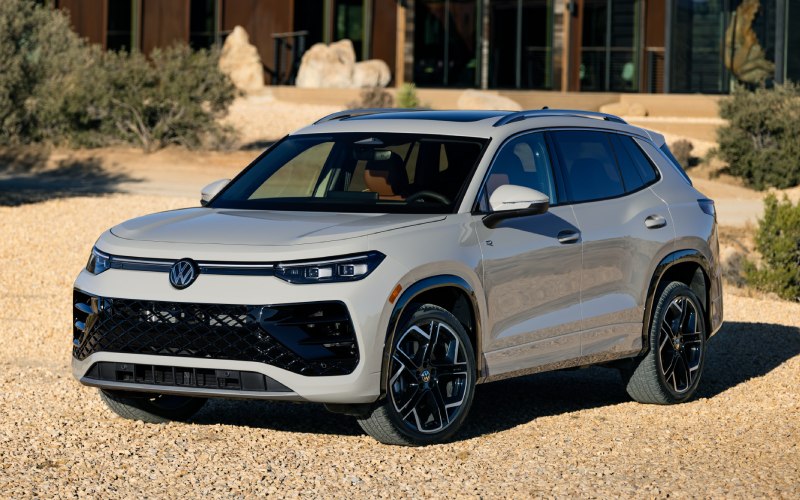
Stevens Point Auto Center – Recommended service and maintenance schedule for Volkswagen Tiguan
- At every visit: Multi-point inspection, set tire pressures to door-jamb spec, top off fluids, check lights and wipers, review open recalls.
- Every 10,000 miles or 1 year: VW-approved full synthetic oil and filter, rotate and balance tires, measure brake pads and rotors, reset service reminder.
- Every 20,000 miles or 2 years: Replace cabin air filter, inspect engine air filter, check cooling system and hoses, inspect exhaust and fuel lines, torque suspension fasteners.
- Every 30,000 miles: Replace engine air filter if restricted, clean throttle body as needed, inspect spark plugs on earlier model years, road-test for drivability.
- Every 40,000 miles or 4 years: Replace brake fluid, perform four-wheel alignment check, inspect 4MOTION AWD coupling and rear differential for leaks.
- Every 60,000 miles: Replace spark plugs on most 2.0L TSI engines, inspect coolant condition, service DSG transmission fluid and filter if equipped per the Owner’s Manual.
- Every 80,000-90,000 miles: Inspect accessory drive belt, water pump area, wheel bearings, and suspension bushings; replace components as needed.
- Every 100,000 miles or 10 years: Replace engine coolant if due, service automatic transmission where applicable, service 4MOTION/Haldex fluid and filter per schedule.
- Seasonally in Wisconsin: Battery health test, evaluate tire tread for winter traction, consider winter tires, and check HVAC performance and defrost.
- After towing or frequent short trips: Shorten oil change interval, check turbo hoses and PCV system, and schedule additional brake inspections.
Your Volkswagen® Tiguan thrives on consistency, and our factory-trained team makes it easy to follow a smart, model-year-appropriate plan. We use Genuine Volkswagen Parts, VW-approved fluids, and diagnostic tools designed for your Tiguan’s 2.0L TSI and 4MOTION systems, and we can calibrate advanced driver assistance features such as IQ.DRIVE after windshield, bumper, or alignment work to help keep sensors operating as intended. Whether your commute is mostly highway or stop-and-go, we tailor intervals to your actual driving so you get the most from every visit without over-servicing. You can expect clear explanations, digital inspection notes, and proactive reminders that help prevent surprises. Maintenance needs vary by model year, engine, drivetrain, and driving conditions—always consult your Owner’s Manual and contact the manufacturer or our service team for details. As the trusted Volkswagen service destination serving in Stevens Point, WI, Wausau, and Plover, we’re ready to manage everything from routine oil changes to DSG services and brake fluid replacements with OEM precision. Stevens Point Auto Center is here to help you protect performance, efficiency, and resale value with care that fits your schedule. Request more information, ask for a personalized maintenance plan, or schedule your next Tiguan service with our team today.
Request more Volkswagen Tiguan Service information

Stevens Point Auto Center – Can the 2026 Volkswagen Atlas Tow My Family Camper Safely in Stevens Point, WI?
Shopping for a three-row SUV that can handle your family, gear, and a weekend trailer across Central Wisconsin? A common question we hear at Stevens Point Auto Center is whether the 2026 Volkswagen Atlas can confidently tow the campers and boats local drivers use. The answer is yes—when properly equipped, the 2026 Atlas offers up to 5,000 lb of towing capacity, powered by a turbocharged 2.0 TSI® engine delivering 269 hp and 273 lb-ft of torque. That blend of torque and smart engineering makes hauling to Lake DuBay, the Wisconsin River landings, or cabins near Waupaca feel refreshingly straightforward.
Beyond the numbers, real-world confidence matters on Highway 10 or County HH when conditions change. Available 4MOTION® all-wheel drive helps manage traction over wet ramps, gravel roads, and snowy starts, distributing power where it is needed. IQ.DRIVE® driver assistance can support your situational awareness on long stretches with features like Lane Assist and Adaptive Cruise Control with Stop and Go, and the Atlas’ spacious cargo area—96.6 cu ft with the rear seats folded—keeps bulky coolers, chairs, and rods organized so your trailer load stays focused on what is behind the hitch.
What exactly fits within that 5,000-pound rating? Here are common Central Wisconsin setups many shoppers consider for the 2026 Atlas. Always verify the actual loaded weight of your specific trailer and follow the Owner’s Manual for equipment requirements, trailer brake needs, and speed guidelines.
- Pop-up camper: Many models with gear and water stay well within the Atlas rating, great for Dyracuse or Hartman Creek weekends.
- Small travel trailer: Lightweight single-axle types—especially minimalist or off-road teardrops—often fall under 5,000 lb loaded.
- Fishing boat package: Aluminum fishing rigs with a 60–115 hp outboard and single-axle trailer are typically a comfortable match.
- Personal watercraft pair: Two PWC on a galvanized trailer commonly remain under the limit, even with fuel and life vests onboard.
- Utility trailer with ATVs or snowmobiles: A single-axle utility trailer carrying one to two machines can be an excellent fit.
- Small enclosed trailer: Tools, camping gear, or event equipment often keep weight modest when you pack smart.
To make towing simple, our team can help you outfit your Atlas with the correct hitch, wiring, and accessories from the Atlas Accessories catalog. Proper hitch class and a 7-pin connector are essential for many brake-equipped trailers, and a quality brake controller is key for predictable stops. If you carry cargo on the roof, always follow posted limits and installation guidance. Proper installation required. See our service advisors for details.
- Confirm your trailer’s gross weight and tongue weight. A common rule is 10-15 percent tongue weight relative to total trailer weight.
- Match your ball mount drop or rise to keep the trailer level and stable.
- Use trailer brakes where required by law and calibrate the controller before you set off.
- Distribute cargo fore-aft to avoid sway and re-check tie-downs after the first few miles.
- Plan fuel and stretch stops—Central Wisconsin crosswinds and grades are easier when you are rested.
- Practice backing in an open lot so boat launches and campground pads feel routine.
Technology in the 2026 Atlas supports towing day to day. The expansive 12-inch display and camera views assist with trailer hookups and parking. myVW can streamline ownership with connected services, and a 3-year Safe & Secure plan is included on most MY26 vehicles for added peace of mind. Carefree Coverage on new Volkswagen vehicles helps simplify scheduled maintenance intervals early in ownership, so you can focus on the next trip instead of the next appointment.
If winter is part of your towing calendar, available 4MOTION® adds traction benefits when pulling a loaded trailer out of an icy driveway or up a slick ramp. And with the Atlas’ responsive turbocharged 2.0 TSI® powertrain, you have confident passing power to handle rural two-lane transitions when conditions allow.
At Stevens Point Auto Center, our product specialists will walk you through trailer setup, show you the Atlas’ cargo solutions, and demonstrate features that make towing easier around Stevens Point, Wausau, Plover, and Wisconsin Rapids. Our certified technicians can install OEM accessories and perform pre-trip inspections so your Atlas is ready for the season. Have a trailer in mind? Bring the specs, and we will help you evaluate the fit.
Frequently Asked Questions:
Do I need 4MOTION® to tow a camper in Central Wisconsin?
4MOTION® is not required to reach the Atlas’ rated towing capacity, but it is a strong asset for traction on gravel, wet ramps, and winter roads. If your towing includes shoulder seasons, boat launches, or unpaved sites, 4MOTION® is worth prioritizing for extra confidence.
What does “when properly equipped” mean for the 5,000-pound rating?
It means your Atlas must have the appropriate hitch hardware, wiring, and—if applicable—an electronic brake controller for trailers that require brakes. Always confirm trailer weight, tongue weight, and equipment requirements in the Owner’s Manual before towing.
Can the 2026 Atlas tow a fishing boat to Lake DuBay?
Many aluminum fishing rigs on single-axle trailers—fuel, gear, and safety equipment included—fall under 5,000 lb and are well-matched to the Atlas. Verify your specific boat and trailer weights and follow recommended loading and braking practices.
How can Stevens Point Auto Center help me get set up?
Our Volkswagen-trained service team can install OEM towing components, help you choose the correct ball mount, check lighting and brake functions, and review safe-loading practices. We can also schedule routine maintenance to keep your Atlas ready for every trip.
Ready to feel how the 2026 Volkswagen Atlas tows on local roads? Visit Stevens Point Volkswagen at 3733 Stanley Street, Stevens Point, WI 54481, or call our sales team at 715-200-8460. We are happy to set up a test drive, review your trailer details, and build a plan that fits your weekends—whether that is a quiet campground or a sunrise launch.
Driver Assistance features are not substitutes for attentive driving. See Owner’s Manual for further details and important limitations.
Always pay careful attention to the road and do not drive while distracted. Not all features are available on all operating systems. Message and data rates may apply. App-Connect features require compatible device, operating system, and mobile apps.
Request more 2026 Volkswagen Atlas information
Is All-Wheel Drive on the 2026 Ford Explorer the Right Choice for Stevens Point, WI Winters?
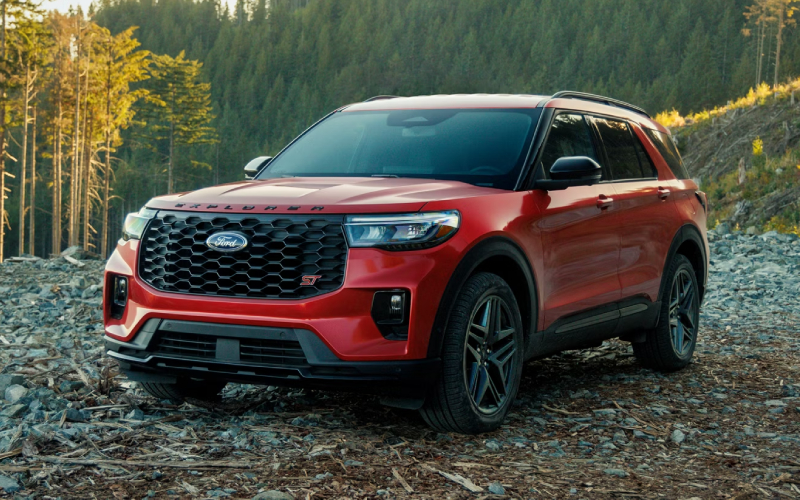
Stevens Point Auto Center – Is All-Wheel Drive on the 2026 Ford Explorer the Right Choice for Stevens Point, WI Winters?
When roads in Central Wisconsin turn slick, the question we hear most about the 2026 Ford Explorer is simple: should you choose All-Wheel Drive for winter confidence. At Stevens Point Auto Center, we help drivers match the right drivetrain to real-life conditions around Stevens Point, Plover, and Wisconsin Rapids. The Explorer gives you flexibility with standard Rear-Wheel Drive and available All-Wheel Drive, plus a refreshed cabin, modern tech, and trims tailored for everything from daily commuting to off-pavement exploring.
Here is the short answer for our area. If your calendar includes pre-dawn commutes, school drop-offs after snowfall, or weekend trips to the lake in shoulder seasons, All-Wheel Drive is the setup most shoppers ultimately prefer. It adds sure-footed traction when surfaces change quickly and works seamlessly with the Explorer’s composed ride and predictable handling. For drivers who stick mostly to plowed city streets, Rear-Wheel Drive can be perfectly fine with a quality set of winter tires. Either way, the Explorer’s balanced chassis and smart safety tech make winter driving feel straightforward and confidence-inspiring.
The 2026 lineup brings a notable addition for adventure-minded shoppers. The new Tremor trim rides on a lifted suspension with a limited-slip rear differential, all-terrain tires, and special 18-inch wheels. If your routes include unplowed driveways, cabin roads, or frequent slush and ruts, Tremor’s extra traction and clearance can make winter driving easier. Prefer a sportier feel. The ST continues with a twin-turbo 3.0-liter V-6 rated at 400 horsepower and 415 lb-ft of torque, while Active, ST-Line, and Platinum feature a turbocharged 2.3-liter four-cylinder rated at 300 horsepower and 310 lb-ft of torque. A 10-speed automatic is standard across the board, and All-Wheel Drive is available on every trim.
Technology plays a bigger role in confidence than ever. Every Explorer includes standard driver-assist features such as forward-collision warning with automated emergency braking, blind-spot monitoring with rear cross-traffic alert, and lane-keeping assist. Inside, a 13.2-inch LCD touchscreen powered by the Ford Digital Experience brings Google and Amazon services together with Apple CarPlay and Android Auto for compatible devices. With the vehicle parked, you can stream or browse via Google Play, and available BlueCruise can be added on select trims for hands-free highway convenience where available and properly equipped. For families juggling charging cables and devices, there are eight USB ports including two in the third row.
If you are weighing AWD vs RWD, think about your routes, parking surfaces, and how often you drive in fresh snow before plows arrive. AWD helps you launch from a stop, climb snowy grades, and maintain momentum when one or more wheels encounter ice or packed snow. It works in the background with traction and stability control so the Explorer tracks straight with gentle steering inputs. Tires remain the biggest swing factor, so pairing AWD with winter-rated rubber is the ultimate confidence combo. Our service team can guide you to the right tread pattern for the way you drive and install, rotate, and store your seasonal sets.
- AWD availability on every trim for added traction in snow
- Tremor trim with lifted suspension, limited-slip rear differential, and all-terrain tires
- Composed, predictable ride and handling for winter commuting
- Standard driver-assist technologies that support safer decision-making
- Ford Digital Experience with a 13.2-inch touchscreen and robust connectivity
For shoppers who tow year round, the 2026 Explorer’s maximum towing capacity is 5,000 pounds when properly equipped. All models include a Class III Towing package with a hitch, trailer wiring, and trailer sway control, so you can confidently pull a pair of snowmobiles, a small fishing boat, or a compact trailer. If you are new to towing in winter, our team will walk you through weight distribution, hitch setup, and best practices for braking and traction on mixed surfaces.
- List your must-haves such as seating, towing, or all-terrain capability
- Decide between RWD or AWD based on your typical winter routes
- Select the trim that aligns with your priorities such as Tremor for capability or ST-Line for style
- Schedule a winter-focused test drive to feel traction, visibility, and tech in action
Our approach is simple. We listen, we map your day-to-day driving, and we suggest the drivetrain and trim that feel right in real conditions. Visit Stevens Point Auto Center on Stanley Street to compare RWD and AWD on identical routes, test the Tremor’s extra ground clearance, or experience the ST’s added power. We are here to make your Explorer decision clear and confident before the next cold front arrives.
Frequently Asked Questions:
Do I need All-Wheel Drive for a 2026 Ford Explorer in Stevens Point, WI
If you regularly drive before plows clear the roads, park on unpaved or sloped surfaces, or travel outside town on winter weekends, AWD is worth it. For mostly in-town driving on plowed streets, RWD works well with dedicated winter tires. We can help you test both to decide.
Which 2026 Explorer trim is best for snow and mixed surfaces
Tremor is the most winter-ready from the factory thanks to a lifted suspension, limited-slip rear differential, and all-terrain tires. Any trim with AWD and proper winter tires will feel confident on plowed and partially plowed roads.
How does AWD impact efficiency on the Explorer
The EPA has not released 2026 fuel economy ratings yet. Based on 2025 guidance, AWD typically reduces highway estimates a bit compared to RWD. Real-world results vary by driving style, temperature, and tire choice. We are happy to review current data during your visit.
Is the Explorer’s tech helpful in winter travel
Yes. Standard driver-assist features support smoother braking and lane tracking, while the Ford Digital Experience integrates navigation, voice assistance, and smartphone compatibility so you can focus on the road. Available BlueCruise on select trims can reduce fatigue on long, well-marked highways where available and properly equipped.
Ready to see how the 2026 Ford Explorer handles Wisconsin winter. Stop by Stevens Point Auto Center in Stevens Point, WI or call 715-344-4100 to schedule a winter-focused test drive. Our non-commission team will help you compare AWD and RWD, choose the right trim, and set you up with the tires and accessories that make every cold morning feel easier.
Request more 2026 Ford Explorer information
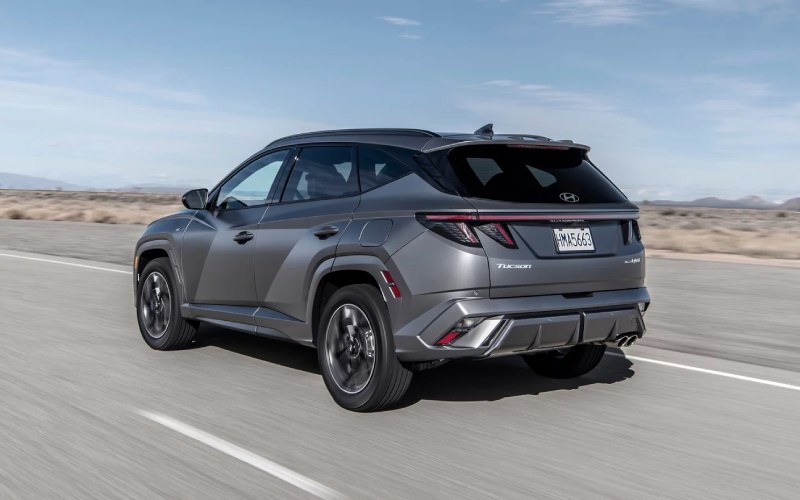
Stevens Point Auto Center – 2025 Hyundai Tucson or Honda CR-V – Which SUV has the smarter driver-assistance for winter confidence near Wisconsin Rapids, WI?
For many shoppers, the most important question in a compact SUV comparison is how well driver-assistance systems help in winter. When the conversation centers on Tucson and CR-V, the topic becomes whether the Hyundai suite offers more real-world support in snow, slush, and tight, low-visibility conditions. Here’s a clear take: Tucson’s available Hyundai SmartSense features—such as Highway Driving Assist 1, Navigation-based Smart Cruise Control with Curve Control, and Lane Following Assist—are designed to minimize workload on longer, darker winter drives, while available Surround View Monitor and Blind-Spot View Monitor bolster awareness in crowded lots when snowbanks narrow sightlines.
The available HTRAC All Wheel Drive system further complements these technologies by distributing torque proactively, which helps when one side of a lane is clear and the other is icy. Add Tucson’s available Remote Smart Parking Assist and you can move the vehicle into or out of a tight space from outside the cabin—useful when neighboring snow piles or narrow plow lines make doors hard to open. CR-V counters with Honda Sensing®, Adaptive Cruise Control with Low-Speed Follow, Lane Keeping Assist, and available Real Time AWD™, all of which are welcome. However, CR-V does not offer a 360-degree camera or a camera-based blind-spot display, and its parking tech is more limited. That’s why, for drivers who expect frequent winter parking and night driving, Tucson’s technology advantage stands out.
- Highway confidence with assistive steering and speed management
- Enhanced visibility at low speeds from multiple camera views
- Hands-free liftgate convenience when gloves and gear occupy both hands
- Smart AWD response for mixed-traction lanes and unplowed streets
- Simple, intuitive interfaces that reduce distraction
The Tucson’s interior and interface also help year-round. A standard 12.3-inch touchscreen is easy to read with gloves off, and the available 12.3-inch digital instrument cluster keeps navigation prompts and assist-status information front and center. Wireless Android Auto™ and Apple CarPlay® simplify daily routines without cables. CR-V’s infotainment is well-executed and familiar, especially on upper trims with a larger screen and wireless smartphone integration, but Tucson’s panoramic curved display architecture and ergonomic controls feel a step ahead in clarity and flexibility.
Shoppers often ask whether these advanced features are usable in the real world or if they’re just spec-sheet talking points. During our test-drive routes, we demonstrate how Highway Driving Assist 1 maintains a centered lane position on well-marked highways, how Navigation-based Smart Cruise Control with Curve Control moderates speed before sharper bends, and how Surround View Monitor can reveal curbs hidden by snow build-up. Remote Smart Parking Assist is a highlight in tight, banked-in spaces. Once drivers see these features in action, the benefits feel obvious—less strain, more awareness, fewer surprises.
Stevens Point Auto Center offers side-by-side drive time tailored to winter priorities, serving Plover, Wisconsin Rapids, and Waupaca. Our product specialists help personalize settings for sensitivity, following distance, and display preferences, so the systems support rather than distract. If winter confidence and everyday ease sit at the top of your list, Tucson’s driver-assistance and visibility tools provide tangible, day-to-day value.
Frequently Asked Questions:
Do Tucson’s driver-assistance systems work in snow and cold?
Yes. While sensors and cameras perform best when clear of snow and ice, Tucson’s available Hyundai SmartSense features are engineered for cold climates, and HTRAC AWD enhances traction when conditions vary across a lane.
Does CR-V offer a 360-degree camera like Tucson?
No. CR-V provides useful parking sensors on upper trims, but it does not offer a Surround View Monitor. Tucson makes a 360-degree camera available to deliver more complete low-speed awareness.
Can I try Highway Driving Assist 1 on a test drive?
Yes. Our team will demonstrate setup and use on a suitable highway route, so you can feel how assistive centering and speed management reduce effort over longer stretches.
Request more 2025 Hyundai Tucson information
Is AWD Confidence Better in the 2025 Volkswagen Tiguan or the 2025 Toyota RAV4 for Wisconsin Rapids, WI?
Stevens Point Auto Center – Is AWD Confidence Better in the 2025 Volkswagen Tiguan or the 2025 Toyota RAV4 for Wisconsin Rapids, WI?
For many Wisconsin drivers, one question rises to the top when cross-shopping compact SUVs for winter: Which gives me more confidence when roads turn slick? In this deep dive, we unpack how the 2025 Volkswagen Tiguan and the 2025 Toyota RAV4 approach traction, stability, and driver-assistance support in challenging conditions common to Wisconsin Rapids, WI and the surrounding communities. While both deliver available all-wheel drive and multiple drive modes, the way each brand integrates chassis tuning, power delivery, and assistance technologies leads to a different feel when the weather shifts.
The 2025 Volkswagen Tiguan pairs an available 4MOTION all-wheel-drive system with selectable drive modes to balance grip and control on wet, slushy, or packed-snow surfaces. Its turbocharged engine provides flexible, low-end response that helps you ease off the line smoothly and maintain momentum without excessive throttle input — valuable traits when you want traction more than raw power. Complementing the hardware is standard IQ.DRIVE®, which brings a robust suite of driver-assistance features, including a hands-on, semi-automated capability that can help with speed and steering support on compatible roads. The 2025 Toyota RAV4 answers with available AWD, Multi-Terrain Select, and Toyota Safety Sense 2.5 with Lane Tracing Assist and Dynamic Radar Cruise Control. Both SUVs feel capable in light to moderate winter conditions, but the Tiguan’s integrated tuning — from throttle mapping to steering feel — tends to communicate more control with less effort in the seat.
- Power delivery and control: The Tiguan’s turbocharged engine delivers responsive low-end torque that helps maintain traction without revving hard, while the RAV4’s naturally aspirated 2.5L emphasizes steady, linear response.
- Assistance that complements winter driving: Standard IQ.DRIVE® supports calmer lane positioning and distance-keeping on plowed highways, and Toyota Safety Sense 2.5 offers similar assistance through Lane Tracing Assist and adaptive cruise.
- Cabin tech that helps in bad weather: The Tiguan’s standard 12-inch center display and available 15-inch screen make at-a-glance navigation and settings adjustments easier with gloves on, while RAV4’s available 10.5-inch display is clear but smaller.
Beyond traction and tech, winter comfort matters. The Tiguan’s available ventilated front seats with a 10-point, full-back massage function reduce fatigue on long drives after a day on the slopes or during extended commutes, and available Harman Kardon audio keeps the atmosphere relaxed. RAV4 offers well-executed comfort with available SofTex® seating and a panoramic roof on select trims, but the Volkswagen’s available luxury features are uncommon in this class and make a difference when temperatures dip.
When choosing for winter, consider how each SUV fits your routes and routines. The Tiguan’s confident chassis composure, turbocharged smoothness, and standard IQ.DRIVE® create a calm, controlled experience that shines on cold, windy days. The RAV4’s surefooted platform and drive-mode variety remain appealing, especially if you prefer a more rugged personality. The most telling test is a back-to-back drive on the same day. At Stevens Point Auto Center — serving Plover, Wisconsin Rapids, and Waupaca — our team can set up side-by-side drives and walk you through how settings, tires, and driver-assist features work together to build confidence.
Frequently Asked Questions:
Do both SUVs offer all-wheel drive for winter?
Yes. Both the 2025 Volkswagen Tiguan and the 2025 Toyota RAV4 offer available AWD systems designed to enhance traction on slick roads.
Which SUV has more advanced standard driver assistance?
The Tiguan makes IQ.DRIVE® standard across the lineup. The RAV4 includes Toyota Safety Sense 2.5 on all grades, which provides a comparable suite with different naming and interface.
Which vehicle feels more composed on icy highways?
Many drivers prefer the Tiguan’s calm steering, turbocharged low-end response, and standard driver-assist integration for a more settled feel at speed, but your preference may vary — test both on the same route to decide.
- Schedule: Book test drives for both SUVs on the same day and route for an apples-to-apples winter comparison.
- Assess: Try different drive modes and note how the steering, throttle, and braking feel as conditions change.
- Identify: List your must-have features — such as AWD modes, screen size, or driver-assistance — and see which model delivers them standard or available.
The outcome for many shoppers is straightforward: the Tiguan’s quiet ride, modern interface, and standard IQ.DRIVE® package bring a refined confidence that makes winter driving less stressful. If you want to explore tires, accessories, and setup tips for seasonal travel, our team can help you configure the right build and walk through features like VW Wi-Fi Hotspot, Wireless App-Connect, and Car-Net® Safe & Secure to keep your family connected and supported all season long.
Request more 2025 Volkswagen Tiguan information
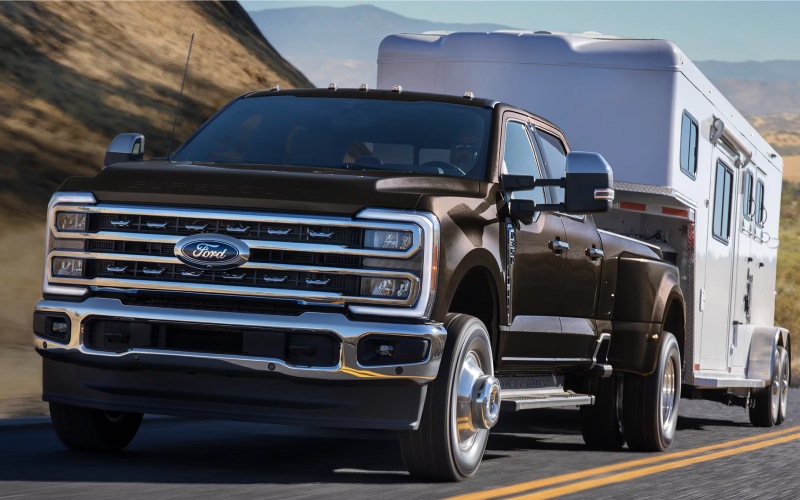
Stevens Point Auto Center – Which Heavy-Duty Truck Tows With More Confidence for Towing around Waupaca, WI – 2025 Ford Super Duty F-350 or Ram 3500?
When comparing heavy-duty pickups for fifth-wheel campers and equipment haulers, shoppers often ask which truck provides more confidence from hook-up to highway. The short answer is that Ford’s proven trailering tech and top-end ratings give Super Duty® a meaningful edge, particularly for complex backing maneuvers and lane changes under load. Ram 3500’s recent infotainment and drivability updates are welcome, but towing is about the sum of power, control, visibility, and the tools that remove guesswork. This guide walks you through the essentials so your next trip around Waupaca, WI is steady from the first mile to the last.
Start with capability. Super Duty® offers an available best-in-class 40,000-lb diesel gooseneck tow rating when properly configured. That top figure matters for heavy fifth-wheels and gooseneck equipment trailers. Equally important, the TorqShift® 10-speed automatic is tuned for low-speed precision and grade holding, so you feel poised when climbing onto highways, descending hills, or threading a campsite after dark. Ram 3500’s available High-Output 6.7L Cummins® Turbo Diesel I6 paired to a new TorqueFlite® HD eight-speed automatic is strong and refined, but Ford’s blend of ratios and cooling calibration inspires confidence when it’s hot, hilly, or windy.
- Hook-up confidence: Pro Trailer Hitch Assist™ can automate alignment to your hitch ball or gooseneck, reducing solo stress.
- Lane-change clarity: Turn Signal Camera View shows what’s alongside the trailer on the center screen as you signal.
- Situational awareness: The 360-Degree Camera provides an overhead composite view for tight lots and fueling stations.
- Power on site: 2kW Pro Power Onboard™ keeps tools, jacks, and lights running without packing a separate generator.
Those features work together to minimize uncertainty—especially for newer operators or when you rotate drivers on a trip. Create Trailer Profiles, label them by name, and the systems recall your settings so pre-trip checks and camera views come up exactly how you like. That consistency means fewer surprises when you’re loading a classic car, leveling a fifth-wheel, or backing a snowmobile trailer at dusk.
- Assess your trailer weight: Know GVWR and pin weight to choose the ideal axle, hitch, and powertrain configuration.
- Match your hitch type: Decide between gooseneck and fifth-wheel hardware and set your Trailer Profiles accordingly.
- Leverage camera tech: Use Pro Trailer Hitch Assist™ and the 360-Degree Camera to verify alignment and clearance.
- Plan power needs: If you run tools or lighting off-grid, factor 2kW Pro Power Onboard™ into your setup.
Beyond the hardware, support matters. A knowledgeable team can help you map your real-world loads to the right truck specs and demonstrate the systems on-site. That’s how you turn spec-sheet potential into a smoother, safer weekend. With Super Duty®, the ease of aligning a hitch, the confidence of seeing down your trailer’s side as you signal, and the calm of steady grade control all add up to lower fatigue and better outcomes trip after trip.
Stevens Point Auto Center is committed to helping you dial in the best combination for your routine, whether that’s a farm flatbed, a toy hauler, or a multi-axle fifth-wheel. Our advisors will walk you through hitch hardware, axle ratios, and camera settings, then ride along to confirm everything works as intended, serving Plover, Wisconsin Rapids, and Waupaca with clear answers and real demonstrations. With the right setup, you’ll spend less time worrying about mirrors and more time enjoying the destination.
Frequently Asked Questions:
What’s the most important single feature for towing confidence?
For most drivers, Pro Trailer Hitch Assist™ is the biggest stress reducer because it automates alignment and gets you hitched quickly without spotters.
How do I know if I need a gooseneck or fifth-wheel setup?
Gooseneck hitches are common for equipment and livestock due to tighter turning radii and high capacity, while fifth-wheel hardware is popular for RVs; we can help you assess trailer type, expected loads, and turning space to choose correctly.
Can the camera systems help at night or in poor weather?
Yes. The 360-Degree Camera, Turn Signal Camera View, and bed/tailgate lighting enhance visibility for hitching and lane changes after dark or in low-contrast conditions.
Will onboard power actually replace a standalone generator?
With 2kW Pro Power Onboard™, you can comfortably run many tools, jacks, lights, and small appliances at the campsite or job site, simplifying your gear list and setup.
Request more 2025 Ford Super Duty F-350 information
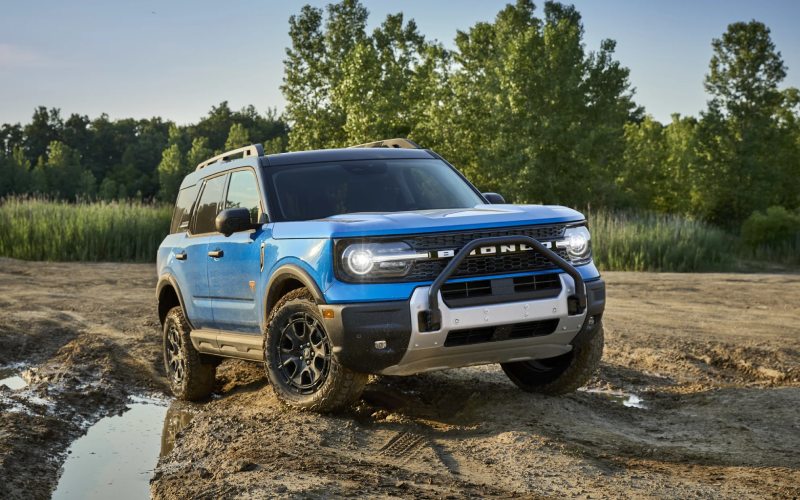
Stevens Point Auto Center – 2025 Ford Bronco vs Jeep Compass – Which SUV Gives Plover, WI Adventurers More All-Terrain Driving Confidence?
SUV shoppers often ask a simple question that has big implications for weekends and winters alike: which compact SUV delivers more all-terrain confidence, the Ford Bronco® Sport or the Jeep® Compass? For Plover, WI drivers who split time between work, errands, and trailheads, the answer comes down to hardware depth, traction technology, and accessory readiness that make adventures easier to start and simpler to manage.
The Bronco® Sport sets a high bar with standard 4×4 and available features that turn difficult surfaces into routine routes. On Badlands® models, a twin-clutch rear drive unit with a rear differential lock can actively move torque side-to-side across the rear axle, helping the vehicle pull through ruts or claw over uneven rock. Trail Control operates like low-speed off-road cruise control, managing throttle and braking downhill and on loose surfaces so the driver can focus on steering. Jeep® Compass brings a capable standard 4×4 system and Selec-Terrain management; Trailhawk® adds an off-road-tuned calibration, hill descent control, and Falken WILDPEAK All-Terrain Tires that work well in deep snow and on gravel. Both can handle Midwest weather, but the Ford’s torque-vectoring rear axle and off-road cruise control provide an edge when the route gets technical.
Beyond traction, the Bronco® Sport was designed to make gearing up simple. Four pre-wired hero switches are ready for auxiliary lights, a compressor, or a winch, while an interior accessory tray is USB-powered for clean dash-cam or GPS installs. All available Off-Road Packages include a Brush Guard, Steel Plated Bumpers, Fender Tie Downs, and Front and Rear Recovery Hooks—factory-engineered pieces that add protection and utility without aftermarket guesswork. The Jeep® Compass offers Mopar® accessories and a robust list of safety and connectivity features, yet it does not match the Ford’s built-in wiring and trail armor approach straight from the showroom.
Cold-weather confidence matters just as much as dirt-road poise. The Bronco® Sport’s upright glass and square hood improve sightlines in blowing snow, while Ford Co-Pilot360 technologies such as BLIS, Lane-Keeping System, and Auto High-Beam Headlamps support long-night drives. The Compass counters with available Active Driving Assist System that can help with steering and speed on well-marked highways, plus standard driver-assist features across most trims. The difference is not whether either SUV is safe—they are—but how the Ford layers visibility, assistance, and rugged equipment to keep trips moving when conditions are changing by the mile.
Power and towing can also influence confidence. The Bronco® Sport offers an available 2.0L EcoBoost engine for assertive passing and merging, and it can tow up to 2,200 lbs when properly equipped. That extra margin is useful for a small trailer, pair of snowmobiles, or a couple of kayaks without leaving gear behind. The Compass supplies a strong 2.0L turbo with 200 hp and up to 2,000 lbs of towing, solid numbers for a compact SUV that serve most weekend needs. If your trip list is expanding, the Ford’s higher tow ceiling and broader powertrain headroom may fit better.
Ultimately, the choice hinges on how often you seek out the unpaved path and how much future customization you want to build in. If your planning includes auxiliary lighting, roof tents, and recovery gear, the Bronco® Sport’s factory pre-wiring and Off-Road Packages are compelling. If you want a stylish, comfortable compact with all-weather capability and you plan to stay closer to the beaten path, the Compass remains a worthy contender.
Frequently Asked Questions:
Do I need a locking rear differential for Wisconsin winters?
A locking or torque-vectoring rear drive unit is not required for winter driving, but it can help maintain momentum and reduce wheelspin on icy, uneven surfaces. The Bronco® Sport Badlands® offers a twin-clutch rear drive unit with a rear differential lock that can be helpful on steep, slick driveways or unplowed roads.
How important is off-road cruise control on snowy hills?
Features like Trail Control regulate speed and braking on steep or slippery descents, improving stability and allowing the driver to steer without feathering the pedals. It is particularly useful on long, icy grades or rutted, snow-covered trails.
Can both SUVs handle a rooftop tent?
Both models can be equipped with roof racks and accessories, but always confirm dynamic and static roof load ratings for the specific trim and rack system you choose. The Bronco® Sport’s safari-style roof design aids headroom and cargo versatility inside the cabin as well.
When you are ready to compare on the road, one visit is all it takes to feel the difference in traction tuning, visibility, and accessory readiness that defines the Bronco® Sport’s advantage. Stevens Point Auto Center is serving Plover, Wisconsin Rapids, and Waupaca with test routes and expert guidance tailored to local roads and weekend plans.
Request more 2025 Ford Bronco Sport information
Connect with us


- Ford
- Ford Bronco Sport
- Ford Dealer
- Ford Explorer
- Ford F-150
- Ford Super Duty F-350
- Hyundai
- Hyundai Dealer
- Hyundai Kona
- Hyundai Palisade
- Hyundai Santa Cruz
- Hyundai Santa Fe
- Hyundai Sonata
- Hyundai Tucson
- Hyundai Tucson Hybrid
- Used Dealer
- Volkswagen
- Volkswagen Atlas
- Volkswagen Atlas Cross Sport
- Volkswagen Jetta
- Volkswagen Tiguan